
Why Are Fly Hooks Numbered Backward? The Interesting 200 Year History of Hook Sizing...

Introduction
If you’ve ever bought fly hooks, you’ve probably noticed something strange: the smaller the number, the larger the hook. A size 2 hook is huge, while a size 22 hook is almost microscopic. But why?
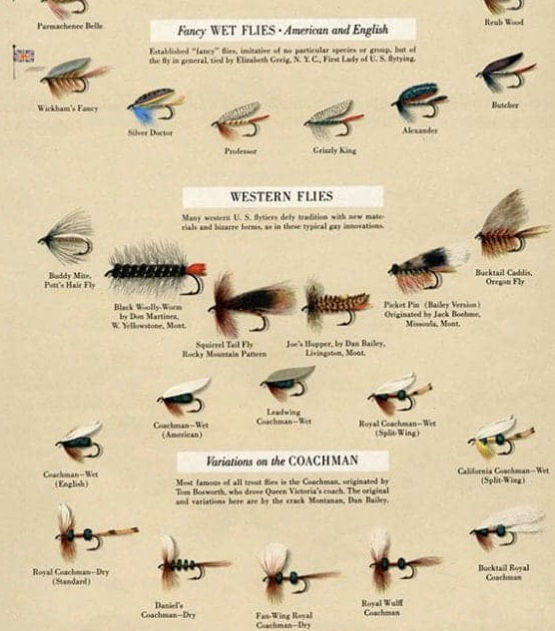
Unlike most measurement systems, where larger numbers indicate bigger sizes, fly hook sizing works in reverse—and this odd numbering system has its roots in centuries-old fishing traditions. In this article, we’ll unravel the mystery behind the backward hook size system and how it became standard in fly fishing.
The Early Blacksmithing Influence
In the 18th and 19th centuries, fish hooks were handmade by blacksmiths, often using lengths of wire. The thicker the wire, the stronger the hook. Over time, hook sizes became loosely based on wire gauge measurements, which also followed a reverse numbering system.
Smaller gauge numbers = thicker wire
Larger gauge numbers = thinner wire

This principle carried over into hook sizes. Smaller numbered hooks were made from thicker wire, meaning they could be used for larger fish, while higher numbered hooks were crafted from thinner wire for smaller fish.
The Old British Hook Sizing System
By the 19th century, British tackle manufacturers began developing a more formalized system for hook sizing. However, standardization was nearly impossible at the time because each manufacturer had its own method.

Some companies measured the gap between the hook point and the shank.
Others measured the overall length of the hook.
Some even used completely arbitrary numbering based on their production batches.
The lack of a universal system made buying hooks a NIGHTMARE—a size 10 hook from one company might be the equivalent of a size 8 from another.
The "Aberdeen" and "Limerick" Hook Sizing Legacy
Two major hook styles, Aberdeen and Limerick, became particularly influential in sizing.
Aberdeen hooks (developed in Scotland) had longer, thinner shanks and were often used for delicate presentations.

Limerick hooks (originating from Ireland) were stouter and stronger.

Each had different numbering systems, which added even more confusion to early fly anglers trying to buy the right size hook.
The Fly Fishing Standardization (Sort Of)
By the 20th century, as fly fishing gained popularity, there was a push to create a more uniform sizing system. The reverse numbering system was kept because anglers were already used to it, and it followed the basic logic that:

A size 2 hook is big, meant for streamers or large fish.
A size 10 hook is medium, great for nymphs and dry flies.
A size 22 hook is tiny, used for midges and small insects.
However, even today, there is no single universal hook sizing standard. Different manufacturers still produce slightly different sizes, meaning a size 12 hook from one brand might be slightly different from another.
Modern Variations in Hook Sizing
Even though the reversed hook numbering system remains, modern fly fishers still face some variations:
Different Brands, Different Sizes
A Mustad size 12 may be different from a Tiemco size 12.
Some brands use "extra-long" or "extra-short" shanks, changing the effective size of the fly.
Saltwater vs. Freshwater Hooks
Saltwater hooks are measured differently, with some following a straight numerical system (a size 1/0 is larger than a 2/0).
Freshwater hooks stick with the reverse numbering system.
"X" Designations (e.g., 2X Long, 3X Strong)
"X Long" hooks have a longer shank than normal hooks of the same size (e.g., a size 12 2X Long is closer to a size 10 standard hook).
"X Strong" hooks are built with heavier wire to handle bigger fish.
Conclusion
The backward fly hook numbering system is a relic of old blacksmithing traditions, British fishing tackle conventions, and the early days of metal hook manufacturing. While it may seem counterintuitive at first, it has stuck around for centuries because anglers got used to it—and change in fly fishing happens slowly.
So next time you’re picking out a size 16 Parachute Adams or a size 6 Woolly Bugger, just remember—you’re following a sizing tradition that dates back over 200 years!


Comments