
Treasure at the Highest Lake in the Sawtooths: Special Edition Casts That Care
- Sydny Thompson

- Aug 6, 2025
- 5 min read
By Sydny Thompson | Special Edition Casts That Care
A Solo Journey into Idaho’s Remote Alpine Fishery July 25–27, 2025
(50% of every subscription to this newsletter goes to fly fishing nonprofits. This feature supports our Behind the Vise initiative: funding American-made fly tyers with materials, exposure, and community support.
The Trout Vault: Alpine Lake Series
I’ve heard this lake called a few different names, Thompson Lake, Thompson Cirque Lake (according to Idaho Fish & Game), and even Profile Lake by some locals. It’s actually listed as the highest lake in the range. No matter what you call it, it’s a gem tucked high in the Sawtooths.

For the sake of this trip report, I call it Thompson Lake.
You don’t hear many people talk about Thompson Lake in the Sawtooths for fly fishing, and I get why. The trail is short but punishing, the shoreline is steep and broken, and the fish? Wild, spooky, and not as easy to fool as you’d think for a lake this remote. But that’s what makes it special.

Thompson sits high in the Sawtooths and feels tucked away, even on a weekend. There were day hikers and a few folks gunning for the nearby peak, but I had the lake entirely to myself for two nights — not a single other rod in the water.
The Hike In
The trail to Thompson Lake is just under 5 miles, starting at Redfish Lake Trailhead, with most of the elevation gain packed into the first and last mile. The start climbs steadily through shaded forest before leveling out into some incredible views. The final push kicks back up — loose, rocky, and exposed. It’s enough to break a sweat and test your pack weight, especially if you’re hauling gear for fly fishing like I was. But once you crest the final ridge and the lake comes into view, it’s worth every step.

We camped right above the shoreline, tucked in just enough to avoid the wind but still wake up to alpine glass.
I originally planned to summit Thompson Peak, the tallest mountain in the Sawtooths, while I was up there. But between the wild fishing and gnarly afternoon weather, I made the call to save that objective for another time. Honestly? No regrets. The lake and the fish had all my attention, and it ended up being the right call.
The Fishing Alpine Cutthroat Trout
The Cutthroat here are amazing. Every fish I caught still had its adipose fin, and I landed over 20 in two days. Most fish ranged from 12–20 inches. I was able to spot a few well over that range. The water is deep and glass-clear, which makes for incredible visuals but tricky casting — most of the shoreline is steep, rocky, and loud. It’s vital to watch your shadow, stay quiet on approach, and find little pockets where you can cast a fly.

While I’m still new to fly fishing, I’m no stranger to alpine lakes, and catching this many stunning fish over a few days really boosted my confidence.
Here’s what worked:
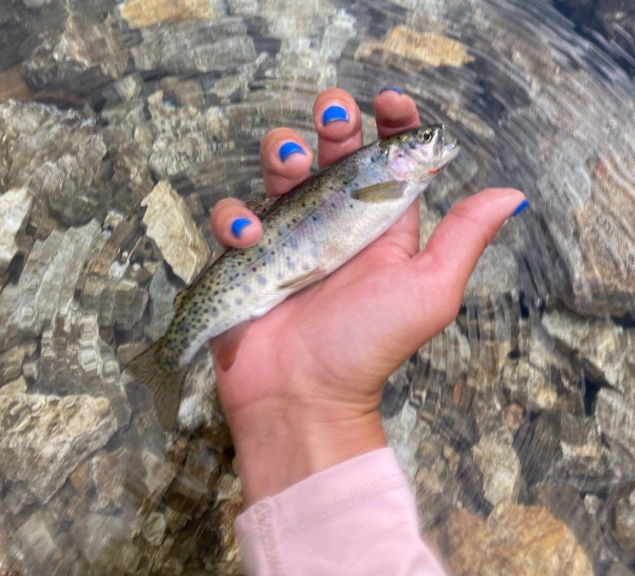
Streamers: Woolly buggers in black, brown, white, and thin mint. Black and thin mint pulled out the bigger fish, but smaller cutties didn’t seem interested. Fast, aggressive strips got hits, especially just before or after storms.

Nymphs: Size 12 prince nymphs worked well, but definitely didn’t catch bigger cutthroat like streamers did.
Dries: In the evenings and mornings, it was a full-blown surface party. Hundreds of rises during what looked like a mosquito hatch. I used mosquito patterns, black ants, and elk hair caddis — all sizes. Didn’t matter too much what I threw; the timing was everything.
Why I Chose Not to Bring a Net
In past alpine lake trips, especially in the Eastern Sierra, I rarely ran into fish bigger than 4–8 inches. I felt confident safely handling those barbless without a net, and didn’t want to pack one in. This lake surprised me. Some of these Cutthroat were solidly over the 20-inch range, and I definitely lost a few good fish because I didn’t have a net. I still made it work, but if I go back... I’m bringing one.
In Depth Gear Guide
Look here for a detailed list if everything Sydny brings on her remote Fly Fishing/Hiking trips!
Backpacking Gear (3-Day / 2-Night)
Raide LF 40L Pack
REI Coop Flash Air 1 Tent
Nemo Switchback Sleeping Pad
REI Women’s Magma 15-degree Sleeping Bag
Sawyer Squeeze water filter
MSR stove + fuel
Garmin InReach Mini
Sunscreen stick, bug spray, pocket knife, BD headlamp
BearVault 450
Food and snacks for 3 days
Small toiletries bag
GoPro Hero 7
Fishing Gear
9’ 5wt lightweight rod + Reddington reel
5X tippet and a 3-pack of 5X 9ft, 3.4 lb tapered leaders
Fishpond Shallow MagPad Fly Puck with ~20 flies (dries, nymphs, streamers)
Forceps, nippers, floatant (unused), indicators (unused)
Small blue zipper bag to keep it all organized
Clothing + Camp Wear
Stio Women’s CFS Drifter Short (lightweight and quick drying, worn for hiking + fishing)
Stio Women’s CFS Board Pant (sun protection, lightweight and quick drying, worn in evenings + early mornings)
Stio Hylas Hooded Pullover (lived in this — breathable + sun protective)
Pit Viper “The Blacking Out Admirer” Heart-Shaped Polarized Sunglasses
Smartwool socks (cold mornings and sleeping at night)
Smartwool gloves (brought but never used)
Skida Battenkill hat (solid sun protection)
Simple beanie (for sleeping + cold mornings)
Chaco sandals (worn entire time, even hiking in/out)
Sports bra (quick drying)
Patagonia Synthetic Puffy (worn on early mornings and after the chilly swim)
Trips Like This

For short trips like this one (3 days, 2 nights), I keep things minimal. I didn’t bring extra clothes beyond the basics because I wanted to save weight — but also because I just didn’t feel like I needed them. I stayed warm, dry, and comfortable the entire time.
Afternoons got warm and quiet. I jumped in for a swim one day, a full-body plunge that left me completely numb. That evening, a big thunderstorm rolled in. I hunkered in my tent and listened to lightning crack across the ridge, breathing in that sharp, clean smell of rain on dry earth. Pure bliss.

Closing Reflections
Wildlife was minimal — deer down low, chipmunks and mice up high.
This trip felt like mine. I’d researched it, planned it, made the haul, and earned the kind of wild fish that remind you why you do this. If you like fishing lakes where you can hike in, read the water, and do it right — Thompson delivers. You just have to be willing to sweat for it.
I didn’t bag the summit this time, but I landed some of the best wild Cutthroat I’ve ever hooked. Thompson Peak can wait, the lake gave me more than enough.
If you decide to make the trip:
Please practice catch and release, and respect the solitude of these alpine lakes. Pack out everything you pack in, tread lightly, and always follow Idaho Fish & Game regulations. Make sure your fishing license is current, and leave the place better than you found it — for the next lucky angler who stumbles onto this treasure.
Editor’s Note: Sydny is a good friend of The Fly Box and Casts That Care. She is a 21-year-old fly fishing newcomer based in Idaho. When she's not casting lines, she's exploring the outdoors, climbing, and embracing the adventures of learning something new. Follow along as she navigates the sport one cast at a time. This story supports our Behind the Vise initiative, which funds American fly tyers with materials, exposure, and community support.


Comments