
The Secret Language of Fly Fishing Knots – What the Names Reveal About the Culture

Introduction
In fly fishing, there are few things as fundamental—and as overlooked—as knots. We learn them, memorize their steps, and tie them in the dark by feel. But while we may use them daily, few anglers ever stop to ask: where do these names come from?
Fly fishing knots carry a secret language—one shaped by function, folklore, history, and personal legacy. Each name is a tiny window into the culture of the sport itself. This article explores the origins and oddities behind the names of the most commonly used knots in fly fishing and what they reveal about the heritage of angling.
Clinch Knot

Why is it called a Clinch?
The name “clinch” comes from the Old English word "clencian", meaning “to hold fast or bind tightly.” It was used historically to describe fastening with a firm grip—something that captures the essence of this simple yet effective knot.
The Improved Clinch Knot, a modern variation, is the version most anglers learn first. It's used to tie a fly or hook to a tippet and is prized for its ease and strength, especially with monofilament.
Its name reflects function over flair—it’s not poetic, but it gets the job done.
Blood Knot

A violent name for a peaceful pursuit
The Blood Knot's name dates back to its use in sailing and ropework, long before it was adopted in fishing. There are two theories about its name:
That it resembles the twisting of arteries or veins.
That it was used to tie together ends of a rope during injuries in battle (less likely).
In fly fishing, the Blood Knot is a favored method for connecting two sections of similar-diameter tippet. Despite the name, it’s known for its elegance and symmetry. The interlocking coils make it strong and smooth—perfect for leaders passing through guides.
Surgeon’s Knot
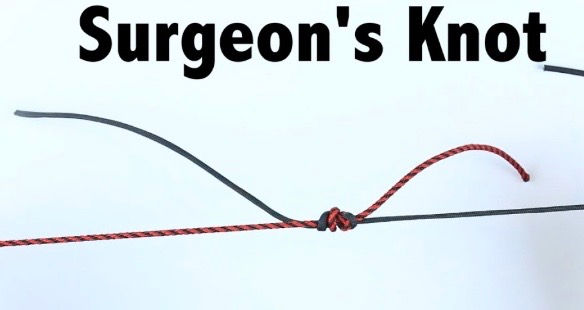
Did it really come from medicine?
Yes—sort of. The Surgeon’s Knot gets its name from its resemblance to the knots used by doctors to tie off sutures. In surgical contexts, knots must be secure, easy to tie, and able to withstand tension—just like in fishing.
Fly anglers adopted the knot because of its ease and versatility, especially when connecting lines of differing diameters. The Double Surgeon’s Knot, its more secure cousin, is especially beloved for fast, strong connections under pressure.
It’s a fitting crossover: both surgeons and fly fishers tie with precision, dexterity, and calm.
Nail Knot
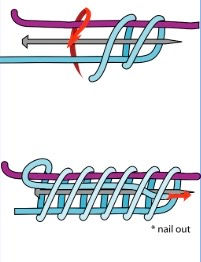
Named for the tool, not the body part
The Nail Knot is used to attach a leader or backing to a fly line, especially before the era of welded loops. It requires a cylindrical object—traditionally, a nail—to form its wraps.
This knot exemplifies DIY ingenuity: early anglers used whatever was handy—nails, hollow tubes, or even coffee straws. While modern tools now help tie it more easily, the name remains a reminder of fly fishing’s practical, problem-solving roots.
Palomar Knot
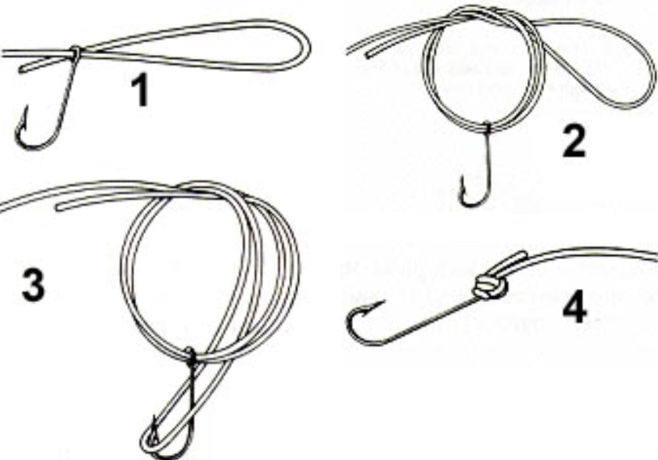
One of the few knots named after a place
The Palomar Knot wasn’t born in fly fishing—it was popularized in conventional angling circles but made its way into fly use for heavier tippet and bass fly setups.
Its origin is debated, but the most accepted theory ties it to Palomar Mountain in California, where it gained popularity among early West Coast anglers. Its strength and simplicity made it ideal for monofilament and fluorocarbon lines.
Though more common in spin fishing, the knot shows how techniques often cross over into fly culture.
Davy Knot

A tribute to Davy Wotton, Welsh fly fishing legend
This small, sleek knot is named after Davy Wotton, a competition fly angler and fly tier from Wales who moved to Arkansas and became an Ozarks fly fishing icon. He designed the knot for speed and minimal bulk, ideal for tight-lining and Euro-nymphing.
The Davy Knot is a rare example of a knot named directly after its creator—something that’s surprisingly uncommon in fly fishing.
Bimini Twist

The most poetic name of all?
The Bimini Twist originated in saltwater fishing, particularly in the Bimini Islands in the Bahamas. It’s a long, looping knot used to create a doubled line, offering increased strength for big game fish.
Its elegance and difficulty have made it a badge of honor among saltwater fly anglers. The name evokes palm trees, turquoise flats, and tarpon tailing in the shallows—a far cry from the function-first naming of other knots.
Conclusion
Knot names in fly fishing are more than just labels—they’re a quiet record of tradition, geography, and invention. From the utilitarian Clinch to the place-rooted Palomar and the personal legacy of the Davy Knot, each one tells a small story about the people and places that shaped the sport.
So the next time you tie one on, take a second to consider the name. There’s history wrapped up in that loop.


Comments