
Updated: The Rise of Non-Traditional Species in Recreational Fishing

This feature was written by The Fly Box and published in Casts That Care, our charity-driven fly fishing newsletter.
Casts That Care delivers real stories, deep dives, and the heart of the fly fishing world while donating 50 percent of all subscription fees to a different fishing-related nonprofit each month.
For decades, recreational anglers in North America focused primarily on trout, bass, and salmon. These species remain dominant, but a measurable shift is underway. Across a base of more than 57 million U.S. anglers taking over 200 million fishing trips annually, more fishermen are beginning to target non-traditional species such as carp, buffalo, gar, and suckers. What was once considered ‘rough fish’ is now gaining legitimacy as a sport category, and that shift is beginning to influence both angling culture and the fishing gear industry.

The Appeal of Carp and Other Unique Species
Carp fishing has exploded in popularity, particularly in the United States. In Europe and Asia, carp have long been considered a premier sport fish, but in North America they were historically dismissed as invasive or undesirable.

That perception is changing. Carp offer a unique challenge: they are wary, strong fighters, and can grow to impressive sizes. In June 2025, an Idaho angler landed a new state-record grass carp weighing 67.65 pounds, while Connecticut saw a 58-pound common carp record set the same year. These trophy-sized catches fuel interest and attract new anglers to the pursuit.

Community events have also helped drive awareness. For example, the Cass River Greenway in Michigan held its first Rough Fish Derby in 2025 as part of the state’s Free Fishing Weekend. Hundreds of participants gathered to target species outside the usual bass and trout categories. In Australia, the Namoi Carp Muster continues to attract anglers of all ages to target invasive carp, blending sport with ecological management.
Market Growth and Gear Sales
The broader fishing industry provides important context for this shift. The global fishing equipment market was valued at approximately $28 billion in 2025 and is projected to exceed $41 billion by 2034, growing at a steady rate of around 4 to 5 percent annually. In the United States alone, the recreational fishing equipment market is estimated at roughly $5 billion, supported by tens of millions of active anglers.
Within that, fly fishing represents a smaller but faster-growing segment. The global fly fishing market is expected to grow from approximately $1.12 billion in 2025 to over $2 billion by 2035, maintaining a compound annual growth rate near 6 percent.

This steady growth makes shifts in angler behavior more significant. As more anglers move toward species like carp and buffalo, even small changes in demand are beginning to influence how gear is designed, marketed, and sold
At the same time, steady industry growth of roughly 4 percent annually means companies are increasingly willing to invest in niche categories, including gear designed for warmwater, multi-species, and carp-focused fishing.
Changing Perceptions and Conservation Impact
There are cultural and ecological dimensions to this trend. Targeting non-traditional species spreads angling pressure across more fish populations, potentially relieving stress on heavily fished trout and bass waters. At the same time, harvesting invasive species like common carp can support ecological goals. Agencies often encourage this kind of fishing as part of habitat management.
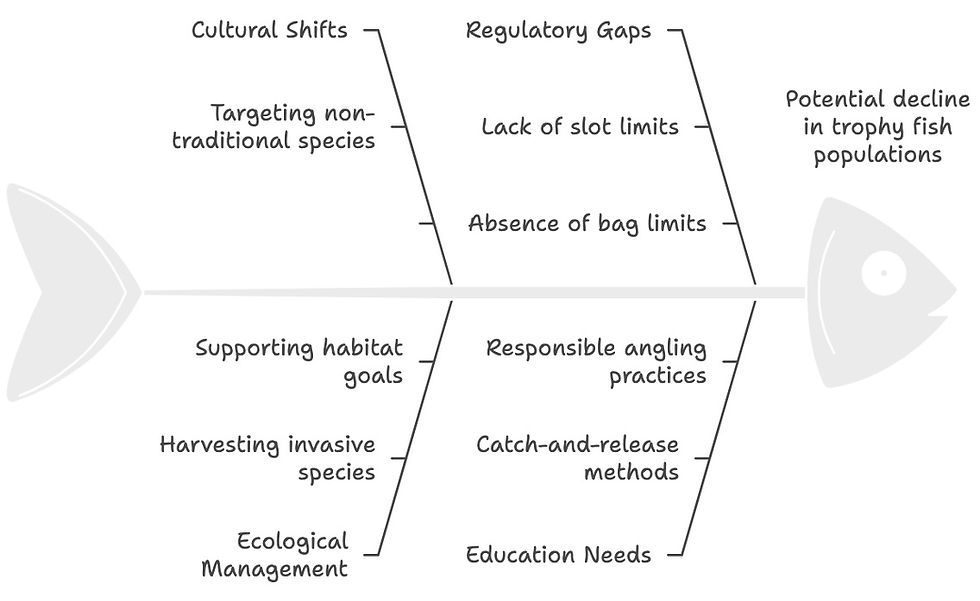
Still, there are risks. As more anglers pursue these fish, populations of large trophy individuals could decline without proper regulation. Many states lack slot limits or bag limits for these species, leaving management gaps. Education on catch-and-release methods and responsible angling practices will be critical as popularity grows.
Why Carp Matter
“Globally, carp are far from a fringe species. The global carp market exceeds $100 billion annually, driven largely by aquaculture and food production. In regions like Europe and Asia, carp have long been respected as both a food source and a sport fish. North America has historically lagged behind in that perception, but the growing interest among anglers suggests a cultural shift toward aligning with global perspectives on the species.”
The Future of Alternative Species Fishing
Looking ahead, the rise in popularity of carp and other non-traditional fish is likely to continue. Anglers are seeking new challenges, social media is amplifying the appeal, and the tackle industry is investing in products that cater to this market. Conservation agencies may begin to introduce new regulations to manage these fisheries sustainably.
What was once seen as a fringe pursuit is now firmly part of the mainstream fishing economy. For gear makers, guides, and conservationists, the growing attention on non-traditional species represents both opportunity and responsibility.
This feature was written by The Fly Box and published in Casts That Care, our charity-driven fly fishing newsletter.
Casts That Care delivers real stories, deep dives, and the heart of the fly fishing world while donating 50 percent of all subscription fees to a different fishing-related nonprofit each month.


Comments