
The Quiet Boom: Why the Fly-Fishing Nymph Market Matters!
- The Fly Box LLC

- Sep 18, 2025
- 3 min read
When most anglers think of fly fishing, images of bushy dry flies drifting across a glassy current or bright streamers swinging through riffles often come to mind. Yet beneath the surface, quite literally, the unsung heroes of modern fly fishing are nymphs—flies designed to imitate aquatic insects in their juvenile, underwater stages. The global market for these patterns is not just holding steady; it’s growing, and it offers one of the clearest windows into how fly fishing is evolving in the 21st century.

What Makes the Nymph Market Different?
Nymphs stand apart from other fly types for one simple reason: they catch fish, a lot of fish. Studies and angler surveys consistently show that trout feed primarily underwater—some estimates put subsurface feeding at 80–90% of a trout’s diet. This makes nymphs not only effective but also indispensable to anglers looking for consistent success on the water.
Unlike dry flies, which require specific conditions (hatches, rising fish, calm water), nymphs are versatile. They can be dead-drifted under an indicator, euro-nymphed along the bottom, or swung in a wet-fly style. That adaptability has made nymphing techniques central to modern fly fishing instruction and competition—and in turn, has fueled steady consumer demand.
Market Overview: A Growing Segment
The global fly-fishing nymph market is currently valued at around $95–105 million (2024–2025 baseline), depending on methodology. Multiple market research reports agree on a steady growth trajectory of ~4–4.4% CAGR through the next decade. Some broader estimates, which include bundled fly assortments and multi-category gear, push the valuation higher, with projections of $1.5 billion by 2032.

~$105 million, CAGR 4.1% through 2033.
~$95.9 million, projected ~$129 million by 2032.
~$1.05 billion, projected ~$1.54 billion by 2032 (broader scope).
The numbers may vary, but the trend line is consistent: the nymph market is growing, outpacing some traditional fly categories.
Drivers of Growth
Younger Anglers Entering the Sport
Younger generations are embracing fly fishing not just as recreation but as part of a broader outdoor lifestyle. For many, nymphing is the most accessible, beginner-friendly way to consistently hook fish.
Innovation in Design & Materials
From tungsten beads for faster sink rates to barbless jig hooks that reduce snagging, nymphs are benefiting from constant iteration. Materials are diversifying, too, with eco-friendly synthetics and lead-free weighting options responding to conservation concerns.

Competition Influence
Euro nymphing, propelled by international competitions, has fueled a wave of specialized nymphs and gear. These techniques emphasize precision and efficiency, further pushing demand for technical nymph patterns.
E-Commerce Expansion
Online retail has dramatically widened the availability of niche nymph patterns. Direct-to-consumer brands and independent tyers can now reach global buyers, bypassing traditional shop limitations.

Regional Highlights
North America & Europe: The established strongholds of fly fishing, with high participation rates and mature markets.
Asia-Pacific: A fast-growing segment. Countries like Japan, India, and China are seeing new fly-fishing communities emerge, driving demand for both flies and instruction.
Latin America: Gaining visibility as travel and destination fishing grow, offering an emerging consumer base.
"small-scale tyers and boutique operations continue to carve out niches with artisanal, limited-run patterns."
Kevin Wolfe, Editor-In-Chief
Challenges & Opportunities
Seasonality: Sales often mirror fishing seasons, creating volatility.
Competition with Other Gear: Beginners may opt for spinners, bait, or lures, limiting fly adoption in some markets.
Material Costs: Fluctuations in feather, fur, and tungsten prices can squeeze margins.
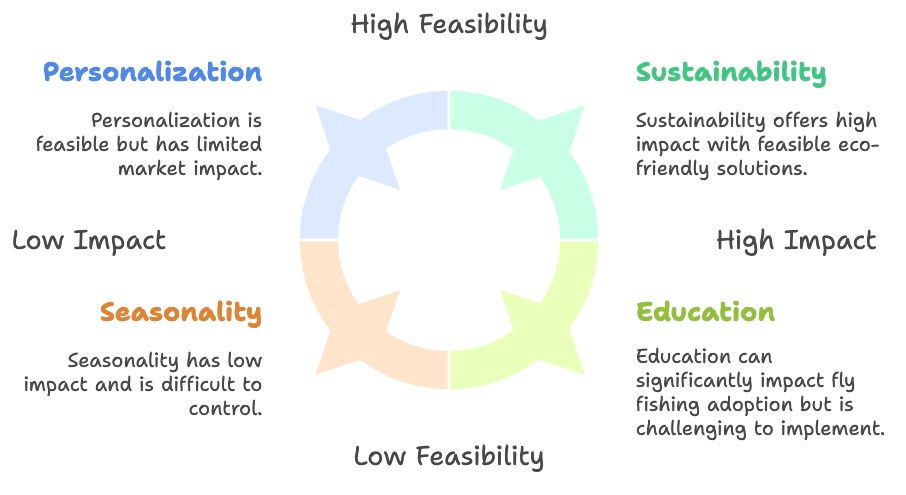
Opportunities lie in:
Sustainability: eco-friendly and biodegradable flies.
Personalization: custom nymphs tied for specific waters or species.
Education: teaching nymphing as the gateway into fly fishing.
Why It Matters
The nymph market’s growth is more than just an economic metric. It reflects a broader truth about fly fishing today: anglers want effectiveness, accessibility, and innovation. Nymphs deliver on all three. As participation in fly fishing hits record highs, the humble nymph—once overshadowed by flashier dries and streamers—is emerging as the quiet backbone of the sport’s future.
For brands, shops, and tyers, paying attention to this market isn’t optional—it’s essential. The rise of the nymph is the rise of modern fly fishing itself.
Sources
Data Insights Market: Global Fly Fishing Nymphs Market Report 2025–2033
24MarketReports: Global Fly Fishing Nymphs Forecast 2025–2032
Dataintelo: Fly Fishing Nymphs Market Growth 2023–2032
LP Information Data: Fly Fishing Nymphs Market Forecast to 2030
Archive Market Research: Fly Fishing Nymphs Market 2025–2033


Comments