
If I Owned a Fly Shop: Here's Some Innovative Things That I Would Do...

This piece is part of Sunday Cast, a weekly op-ed published in Casts That Care—our daily fly fishing newsletter. Each subscription helps support fly fishing charities, with 50% of fees donated every month, Join Us Here!
Read more. Think deeper. Fish better.

Most fly shops today are in trouble. Skyrocketing rent, big-box competitors, and online sales have chipped away at what used to be the heartbeat of local fly fishing communities. But it doesn’t have to be this way.
If I owned a brick-and-mortar fly shop, I’d rebuild it around value—not just products. Here’s exactly what I’d do to not just survive, but thrive.
1. The Local Intel Subscription
Let’s face it—fly anglers don’t need more flies. They need better info. And right now, the most valuable part of most fly shops is that little chalkboard on the wall with scribbled notes from guides who were out yesterday.
So why is that board locked inside a building?
I'd turn it into a subscription service.
Real-time fishing reports (written by humans, not scraped from the web)
Updated every 2–3 days
Includes rotating maps of productive zones
Delivered to your inbox, not hidden behind the counter

This is not just for locals, weekend warriors, and snowbirds who want boots-on-the-ground info. The subscription pays for itself in missed skunks alone.
2. Fly Boxes That Just Make Sense
Forget subscriptions. I’d keep it simple. Pre-packed fly boxes, ready to grab off the shelf at the register.

Each one would be:
Intuitive
Seasonally relevant
Designed for wherever you’re fishing
Heading out this weekend? Here’s the box you need. No overthinking. No signing up. Just flies that make sense, Pre Packaged and sols at the counter when you need them most.
3. Make the Shop a Destination
This is the heart of it. Your fly shop shouldn’t feel like a store. It should feel like the clubhouse.
I’m talking:

Free casting lanes (not tucked away—centerpiece stuff)
Beer on tap from a local brewery
Weekend fly tying demos
Movie nights on a drop-down screen
Birthday parties for kids that want to tie their own fly and catch their first fish
Yes—people are already doing this. Fly shops are hosting movie nights once a year, and hosting casting/tying events once a month. But the key is committing to it. Every fly shop should feel like you want to stay there even if you’re not buying anything. For the same reason people drive by a driving range and stop to "hit a few balls" or a kid wants to go to the batting cages for their birthday; the fly shop should be a destination!
4. The Fly Lab: Test, Trade, Tie, Talk
This is where retail gets hands-on.
Picture a dedicated corner with:
A mini casting lane for rod testing
A water tank with current to watch fly action
A formal trade system for used gear
Communal tying benches where locals can walk in and spin bugs
The trade system? That’s the secret sauce. Let customers bring in lightly used gear, price it through the shop, and take credit toward new equipment. Or, create an entire selection of "locally pre owned gear" people who have used the gear in your area, and it gets priced by the experts at the shop. This creates a local vibe, and no one gets ripped off! It keeps gear moving, builds trust, and brings budget-conscious anglers into the shop.
And the Fly Lab doesn’t need to be fancy. Just real tools, in a real corner of the shop, that bring people together.
5. Rethinking the Brand Relationship
Fly shops shouldn’t be bound by outdated endorsement models. I’d flip the script:
Local Co-Branded Gear, Rooted in Place
Work with established manufacturers like Orvis or Simms to make small-run, exclusive products that celebrate the region, not the shop name. Think a hoodie designed around YOUR local river or a reel engraved with a backcountry hotspot no one outside the area knows. You commit to the customer base, they handle the manufacturing. You both win, and the gear actually means something to locals.
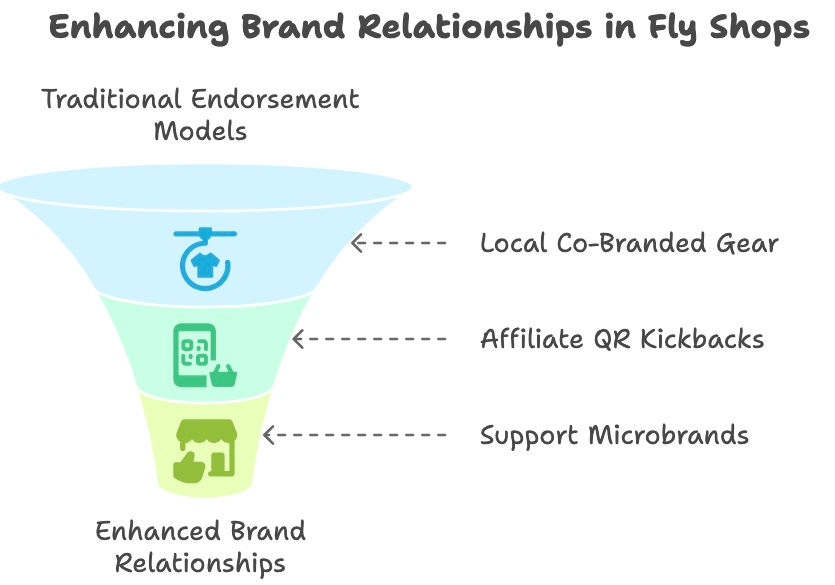
Affiliate-Style QR Kickbacks
When a shop doesn’t have something in stock, the customer should still have a reason to stick around. They scan a QR code, buy directly from Orvis through the shop’s affiliate portal, get a small discount, and the shop gets a solid cut. It keeps customers inside the shop’s and the manufacturer’s ecosystem.
Support the Smallest Brands
This one I am really excited about, and may be the easiest one to implement!
I’d would carve out shelf space for microbrands—those 500-follower accounts making gear in a garage 20 miles down the road. Partner with them to create co-labeled gear. You get unique inventory and a compelling story to tell, and they get a launchpad. For them, that kind of exposure is gold—and for you, it’s authentic local value that can’t be mass-produced.
Final Cast
Fly shops will die if they only try to sell things people can get online. But they’ll thrive if they focus on what the internet can’t offer: community, conversation, and context.
If I ever open a fly shop, it won’t be because I want to sell flies. It’ll be because I want to build something people can’t help but be a part of.
See you at the shop.


Comments