
Oregon's Proposed Hunting and Fishing Ban Could Reshape Conservation Across America

This feature was written by The Fly Box and published in Casts That Care, our charity-driven fly fishing newsletter.
Casts That Care delivers real stories, deep dives, and the heart of the fly fishing world while donating 50% of all subscription fees to a different fishing-related nonprofit each month. This month it is

A controversial ballot initiative in Oregon is moving closer to becoming reality, and if approved by voters this November, it could fundamentally change the future of hunting, fishing, farming, and wildlife management throughout the state.
Known as Initiative Petition 28, or the PEACE Act (People for the Elimination of Animal Cruelty Exemptions), the proposal would remove long-standing exemptions within Oregon's animal cruelty laws. Supporters argue the measure is necessary to provide greater protections for animals. Opponents say it would effectively criminalize hunting, fishing, trapping, livestock production, and many forms of wildlife management.
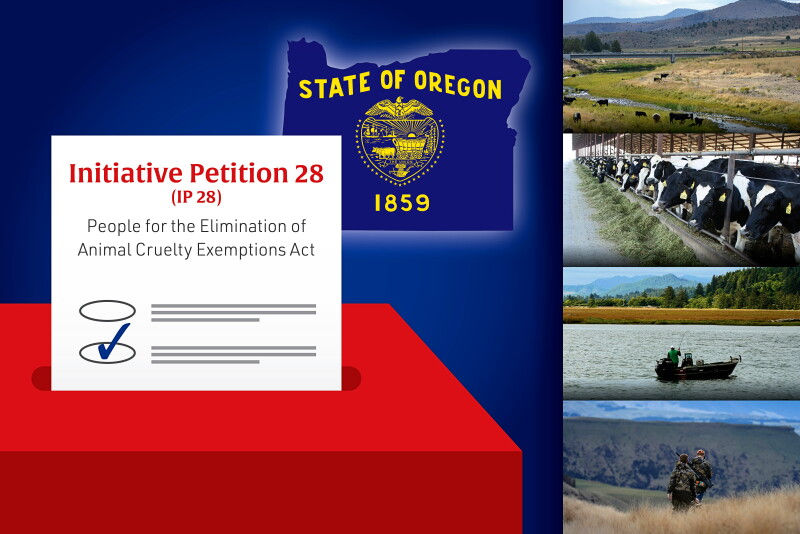
Last week, organizers announced they had submitted more than 126,000 signatures, surpassing the approximately 117,000 valid signatures required to qualify for Oregon's November ballot. State officials must still verify those signatures before the measure officially appears before voters.
What Would The Initiative Do?
At the center of the debate is Oregon's current animal cruelty law.
Today, activities such as hunting, fishing, trapping, farming, ranching, and wildlife management are specifically exempted from criminal animal abuse statutes. Initiative Petition 28 would remove many of those exemptions. Critics argue that by doing so, nearly any activity that injures or kills an animal could become a criminal offense unless it falls under limited exceptions such as self-defense or veterinary care.
The implications could be sweeping.
Opponents say recreational and commercial fishing could become illegal. Licensed hunting seasons could disappear. Wildlife management practices used to control invasive species or balance game populations could be challenged under criminal law. Agricultural practices involving livestock could also face significant legal uncertainty.
Supporters of the proposal argue that animals deserve stronger legal protections and that existing exemptions allow unnecessary suffering to occur. They have also proposed a transition fund intended to help workers in animal-related industries move into other careers if the measure passes.
Why Anglers Should Pay Attention
For fly anglers, the debate extends far beyond whether people can keep fish for dinner.
Much of modern conservation in the United States is funded by hunters and anglers. License sales, excise taxes on fishing equipment, and other user-generated revenue help pay for habitat restoration, fisheries management, scientific research, public access projects, and fish stocking programs.
Several conservation and sporting organizations have warned that eliminating hunting and fishing could dramatically reduce funding available to the Oregon Department of Fish and Wildlife, potentially impacting conservation efforts across the state.
The issue also touches tribal communities. Hunting and fishing rights have deep cultural, historical, and treaty significance for many tribes throughout Oregon and the Pacific Northwest. Critics of the initiative argue the proposal creates significant uncertainty regarding those rights and how they would be interpreted under the new law.
Opposition From Both Sides Of The Political Aisle
One of the more unusual aspects of this story is the broad coalition opposing the measure.
Conservation groups, hunting organizations, agricultural groups, and political leaders from both major parties have publicly criticized the initiative. Even Oregon Governor Tina Kotek has voiced opposition, arguing that the proposal could criminalize common agricultural practices and create unintended consequences for Oregon's economy and natural resource industries.
Organizations ranging from the Oregon Farm Bureau to sporting groups such as the National Wild Turkey Federation, Backcountry Hunters & Anglers, Ducks Unlimited, and the Rocky Mountain Elk Foundation have also spoken against the proposal.

A Vote That Could Reach Far Beyond Oregon
Whether voters ultimately approve or reject Initiative Petition 28, the debate is likely to be watched closely across the country.
For decades, conservation in North America has largely operated under a model where hunters and anglers fund a significant portion of wildlife management. Oregon's vote could become one of the most consequential tests yet of how the public views that relationship.
For fly fishers, the question goes beyond access to a river or a fishing season. It raises a broader discussion about who pays for conservation, how wildlife is managed, and what role anglers should play in the future of America's natural resources.
This November, Oregon voters may help answer that question.
This feature was written by The Fly Box and published in Casts That Care, our charity-driven fly fishing newsletter.
Casts That Care delivers real stories, deep dives, and the heart of the fly fishing world while donating 50% of all subscription fees to a different fishing-related nonprofit each month. This month it is


Comments