
A Look Into The History Of The Woolly Bugger – The Fly That Took Over the World

Introduction
The Woolly Bugger is one of the most widely used and successful fly patterns in history. It is a staple in nearly every angler’s fly box, used for trout, bass, steelhead, salmon, and even saltwater species. While its versatility and effectiveness are well known, its origins and rise to prominence are often overlooked.

The Woolly Bugger is not an ancient fly, nor was it tied by traditional European fly fishers. It is a relatively modern pattern, emerging in the 1970s as an adaptation of older wet flies. Its success was immediate, and today it remains one of the most widely trusted flies in existence. This article traces the Woolly Bugger’s history, its connections to earlier fly designs, and how it became a global fly-fishing phenomenon.
The Origins – A Fly Designed in Pennsylvania
The Woolly Bugger was first tied in the early 1970s by Russell Blessing, a fly tyer and angler from Pennsylvania. He initially designed it as a smallmouth bass fly, intending to imitate the hellgrammite, the larval stage of the dobsonfly, a common food source in the Susquehanna River system.

Blessing’s design was an adaptation of an older pattern known as the Woolly Worm, a simple wet fly with a chenille body and a hackle palmered along its length. The Woolly Worm itself was likely derived from even older patterns, such as the British palmer flies used in the 18th and 19th centuries. Blessing made a key modification—he added a marabou tail to increase movement in the water. This change proved to be transformative.
At first, the Woolly Bugger was used locally, but its effectiveness soon gained attention. It proved deadly not only for bass but also for trout, and it quickly spread beyond Pennsylvania’s rivers. By the late 1970s and early 1980s, it had become a widely recognized fly.
A Connection to the Past – The Influence of Palmered Flies
The Woolly Bugger’s design has clear connections to older wet fly patterns, particularly the palmer flies used in England and Scotland as early as the 1600s. These flies, such as the Red Palmer and the Black Palmer, featured a body wrapped with hackle to create a segmented, bristled appearance. The term “palmer” refers to the worm-like body shape of these flies, which were designed to imitate caterpillars or other terrestrial insects that fell into the water.

In the United States, variations of the palmer flies evolved over time into patterns like the Woolly Worm, which removed the wings found in earlier wet flies but retained the hackle and body segmentation. The Woolly Bugger took this evolution a step further with the addition of the soft marabou tail, giving it a more lifelike, flowing motion in the water.
This lineage suggests that while the Woolly Bugger may have been a modern invention, its basic design was shaped by centuries of fly-tying tradition.
The Woolly Bugger’s Role in the Expansion of Streamer Fishing
The Woolly Bugger’s success coincided with a broader shift in fly fishing during the 20th century. Traditionally, fly fishing had been dominated by dry flies and wet flies that imitated insects. However, as anglers sought to target larger fish, they began to experiment with streamer patterns—flies that imitated baitfish, leeches, or other larger prey items.

The Woolly Bugger became one of the defining flies of this transition. Unlike traditional wet flies, which were often fished with a dead drift, the Woolly Bugger could be retrieved actively, triggering aggressive strikes from predatory fish. Its versatility in mimicking different types of prey allowed it to be used effectively in a wide range of waters, from fast-moving rivers to stillwater lakes.
As fly fishing expanded beyond trout streams and into bass, pike, and even saltwater fisheries, the Woolly Bugger adapted easily to new environments. It became one of the few flies that could be relied upon almost anywhere, for almost any species.
Adoption and Recognition as a Classic Pattern
By the late 20th century, the Woolly Bugger had become one of the most commonly recommended flies for new anglers. Its effectiveness and ease of tying made it a natural choice for beginners, but experienced anglers also recognized its value. It became a standard pattern in every fly shop, available in a variety of colors and sizes.

The pattern was further cemented as a classic when it was included in lists of essential flies published by major fly fishing writers and historians.
In 1991, the Trout Unlimited publication Trout magazine even referred to the Woolly Bugger as the most effective fly ever created.
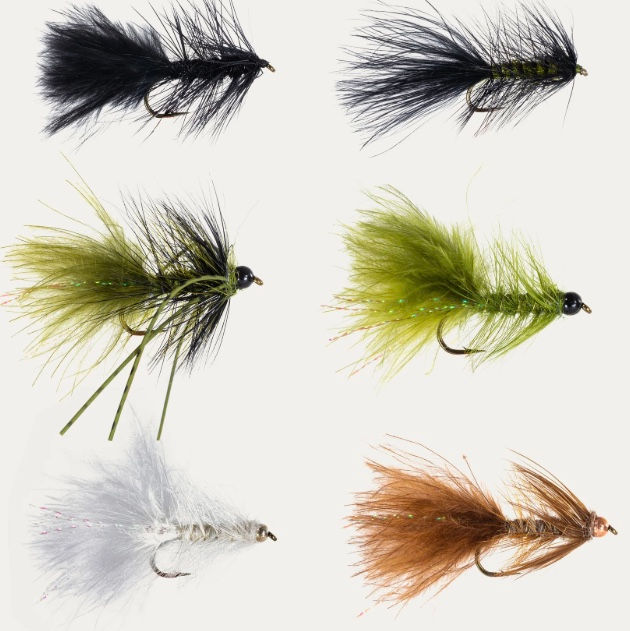
Today, the Woolly Bugger is not only one of the most popular flies but also one of the most frequently tied patterns. It has been modified countless times—some versions include bead heads for added weight, flash in the tail for extra visibility, or rubber legs for additional movement. Yet, despite these variations, the core design remains unchanged from Blessing’s original concept.
Conclusion – A Fly That Changed Fly Fishing
The Woolly Bugger may not be the oldest fly pattern, but few flies have had a greater impact on modern fly fishing. From its origins in Pennsylvania streams to its status as an internationally trusted pattern, it has demonstrated unmatched versatility and effectiveness.
Though its roots lie in centuries-old wet fly traditions, its introduction in the 1970s helped usher in a new era of streamer fishing and predatory fly tactics. Whether for trout, bass, or even saltwater species, the Woolly Bugger continues to prove that sometimes, the simplest patterns are also the most enduring.
As long as fly fishing exists, the Woolly Bugger will remain a part of it.


Comments